Showing posts with label Pope Francis. Show all posts

Wednesday, May 7, 2025

May 7, 2025: "On the Subway," Different Lives, "When I Come Back"

Well, I'm done teaching for a little while.  Submitted my final grades for the semester yesterday at around 11:58 a.m.  (They were due at noon.)  Then I sat and just breathed for a little while, thinking of the last four or so months--teaching and the NEA Big Read and the Great Lakes Poetry Festival and the death of a pope and my sisters moving and my daughter moving and my son finishing up his junior year in high school.  I'm not even going to get into politics.  The beginning of 2025 has literally felt like a couple centuries long.

I've been evaluating my life a lot since January.  Thinking about jobs and family and friends and death and failure and success.  What makes me happy and sad.  What my dreams and hopes are.  Even when I was a kid, I wanted to make a difference in the world somehow.  Cure something incurable.  Discover something undiscovered.  Write something heretofore unwritten.

Now that I'm old(er), I'd be happy just knowing that I made someone smile on a bad day.

Sharon Olds confronts the racial divide while . . . .

On the Subway

by: Sharon Olds

The boy and I face each other.
His feet are huge, in black sneakers
laced with white in a complex pattern like a
set of intentional scars. We are stuck on
opposite sides of the car, a couple of
molecules stuck in a rod of energy
rapidly moving through darkness. He has the
casual cold look of a mugger,
alert under lowered eyelids. He is wearing
red, like the inside of the body
exposed. I am wearing old fur, the
whole skin of an animal taken
and used. I look at his unknown face,
he looks at my grandmother's coat, and I don’t
know if I am in his power —
he could take my coat so easily, my
briefcase, my life —
or if he is in my power, the way I am
living off his life, eating the steak
he may not be eating, as if I am taking
the food from his mouth. And he is black
and I am white, and without meaning or
trying to I must profit from our history,
the way he absorbs the murderous beams of the
nation’s heart, as black cotton
absorbs the heat of the sun and holds it. There is
no way to know how easy this
white skin makes my life, this
life he could break so easily, the way I
think his own back is being broken, the
rod of his soul that at birth was dark and
fluid, rich as the heart of a seedling
ready to thrust up into any available light.


This poem is not easy.  It's confronting racism--the life of a wealthy white woman versus the life of a poor black young man.   The white woman feels threatened by the young man's presence, even though she has no reason to.  Through her words, Olds is trying to put a face on prejudice, make it not about ideologies but about real people.

That's what all poets do--speak truth, even when that truth is difficult.  Truth can open people's eyes (unless you own a MAGA hat).  That's why Stalin imprisoned poets and writers in gulags.  It's also why dictators do things like ban books and attack journalists and arrest protestors.  Truth is the greatest weapon against tyranny.

So, I'm going to share some of my truths tonight, even though my words are not going to stop the war in Ukraine or make the current President of the United States sane.

Currently, in Rome, around 130 some Catholic cardinals are conclaving in the Sistine Chapel to choose the next pope.  Around 1:30 p.m., black smoke came pouring out of the chimney, indicating that no pontiff had been selected.  Voting begins again tomorrow.

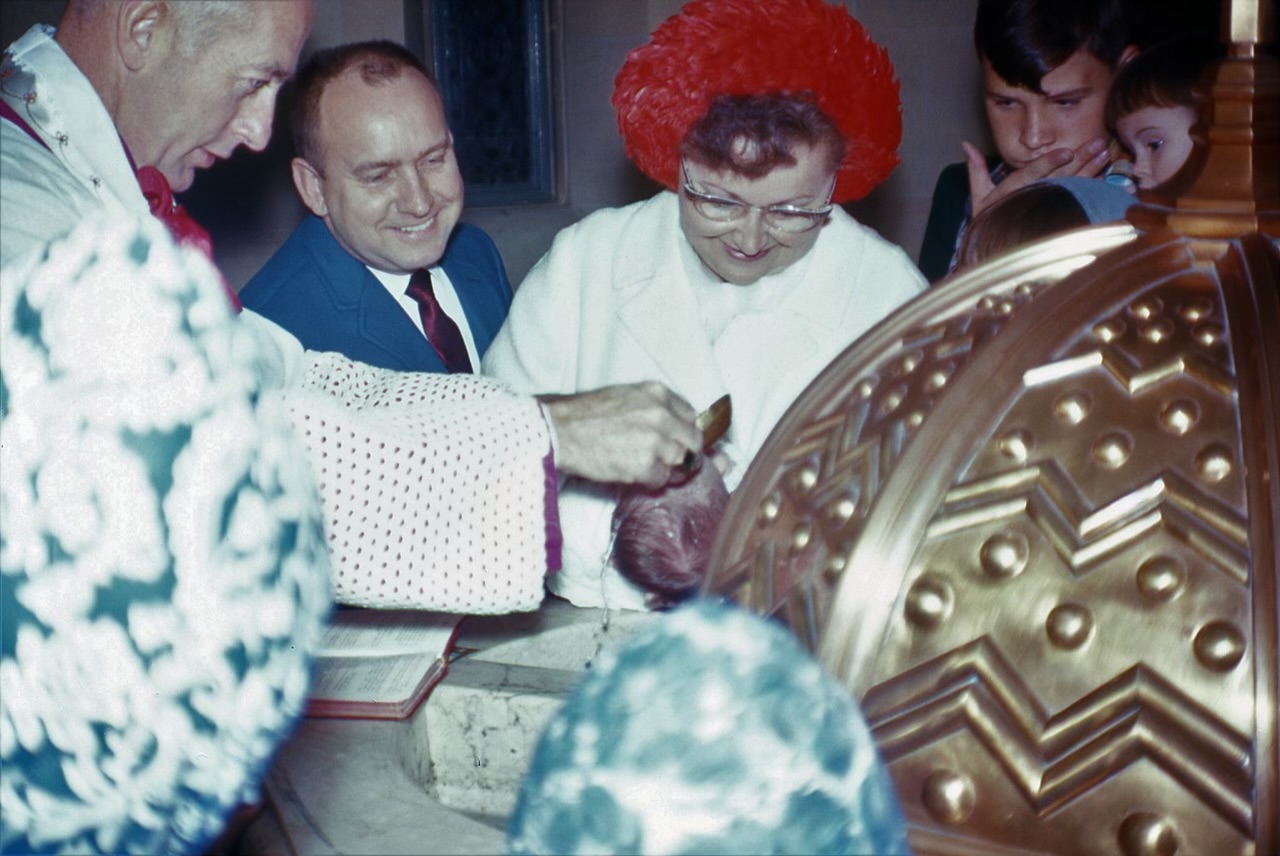
I was baptized by a bishop.  His name was Joseph M. Breitenbeck.  I never met the man, but I did see him on TV serving Mass with Pope John Paul II at the Pontiac Silverdome in 1987.  I think my mom thought I was her best shot at having a priest son.  However, I never felt that call.  The best I could do was become a church organist.

Except for a few years (high school into college) when I avoided religion, I've been a pretty faithful churchgoer most of my life.  I find the history of the Catholic church fascinating, especially the highly secretive process of selecting popes.  So, for the last couple weeks (ever since the funeral of Pope Franics), I've been reading up on the rules of a conclave and the names of the papabile (favored cardinals).

I'm sure the mothers of each of those cardinals had dreams of their sons becoming pope.  Perhaps, as Bishop Breitenbeck was drowning me with holy water, my mom had some thought about me becoming the first pope from the United States.  (The first of many disappointments she experienced because of me.)  

Maybe I was a pope in a former life.  Personally, I’d prefer to be the reincarnation of Robert Frost or Flannery O’Connor or Sylvia Plath (without the mental illness, I’ve already got daddy issues).  Of course, before Pope Francis was pope, he was just Jorge from Buenos Aires, and before Flannery O’Connor was THE Flannery O’Connor, she was just Mary from Savannah.  Fame is an artificial construct.  It can change people, sure, but, for the most part, I’d bet Pope Francis still felt like that little Argentinian boy even while blessing the crowds from the balcony of Saint Peter’s.  

I will never be a priest or bishop or cardinal or pope.  I will never be a Southern gothic writer from Georgia.  As Popeye says, “I yam what I yam.”  I’m a poet from the Upper Peninsula of Michigan.  I’m also a husband, father, teacher, friend, church musician, and library programmer.  In a year’s time, I might be something else.

Whether I like it or not, life is about change and reinvention.  I will not be the same person tomorrow that I am today.  Yes, a bishop baptized me—the same bishop who served Communion with Pope John Paul II over 40 years ago in Detroit.  That doesn’t mean the cardinals are going to elect me the first pope from North America.

Saint Marty wrote a poem tonight about reincarnation, based on the following prompt from The Daily Poet:

On this day in 1977, Seattle Slew won the Kentucky Derby.  Since racehorses have the most interesting names, look up the names of horses (they don’t have to be famous) and use ten to fifteen of them in a poem.  Or make a list of your own made-up humorous, poignant, or whimsical racehorse names.  Write a poem about something other than a horse race using either list of names.

When I Come Back

by: Martin Achatz

it will be as a flower
with a name like Charismatic
or American Pharoah or Tim Tam.
My petals will be striped purple,
my stem laced with thorns
to discourage being plucked for vases.

Or I will find myself buried
in a field of goldenrod, nestled
in the rib cage of a long-dead 
moose or sealed in a tomb 
of sun-baked manure—yes, I will
be a stone so precious it defies
words, begs to be placed on
the tongue and sucked until
it’s smooth as a frozen
tear or frog belly.  At night,
the moon will call me, sing
out my name:  Sunday Silence.

Or maybe I’ll sprout as a feather
in a peacock tail, ride all day
behind her until she shivers
herself into glory at dusk, a pleasant
colony of eyes blinking at the heavens.

A field of Ferdinand grass, swale
crowded with cattails, flash
flood in Thunder Gulch where
unbridled waters swallow
rock, mesa, saguaro in one
big brown gulp—I could be
all of these when I come back.

Or just maybe I’ll be a word or breath
in a poem that makes everyone 
say Damn! then Damn! again,
as if they’ve just found twenty dollars
in an old coat pocket or been kissed
hard by an old lover they haven’t seen
since high school or college.


Thursday, May 1, 2025

May 1, 2025: "Summer Solstice, New York City," Change, "Habemus Spring"

Yes, I know that it’s been a while since my last post.  A lot has happened since Good Friday.  Pope Francis died on Easter Monday.  President 47 ignored the Vatican dress code, played with his phone, chewed gum, and fell asleep in the front row of the papal funeral.  I taught my last classes for the winter semester.  

A lot has also stayed the same since my last post.  President 47 is still trying to dismantle the United States Constitution.  And defund NPR and PBS.  And get rid of the Department of Education.  And deport U.S. citizens to foreign countries without due process.  And send ICE agents into schools and churches.  I could go on, but you get the idea.  

It’s enough to make me want to climb to the top of a building and jump.

Speaking of which . . . 

Summer Solstice, New York City

by: Sharon Olds


By the end of the longest day of the year he could not stand it,
he went up the iron stairs through the roof of the building
and over the soft, tarry surface
to the edge, put one leg over the complex green tin cornice
and said if they came a step closer that was it.
Then the huge machinery of the earth began to work for his life,
the cops came in their suits blue-grey as the sky on a cloudy evening,
and one put on a bullet-proof vest, a
black shell around his own life,
life of his children's father, in case
the man was armed, and one, slung with a
rope like the sign of his bounden duty,
came up out of a hole in the top of the neighboring building
like the gold hole they say is in the top of the head,
and began to lurk toward the man who wanted to die.
The tallest cop approached him directly,
softly, slowly, talking to him, talking, talking,
while the man's leg hung over the lip of the next world
and the crowd gathered in the street, silent, and the
hairy net with its implacable grid was
unfolded, near the curb, and spread out, and
stretched as the sheet is prepared to receive at a birth.
Then they all came a little closer
where he squatted next to his death, his shirt
glowing its milky glow like something
growing in a dish at night in the dark in a lab and then
everything stopped
as his body jerked and he
stepped down from the parapet and went toward them
and they closed on him, I thought they were going to
beat him up, as a mother whose child has been
lost might scream at the child when its found, they
took him by the arms and held him up and
leaned him against the wall of the chimney and the
tall cop lit a cigarette
in his own mouth, and gave it to him, and
then they all lit cigarettes, and the
red, glowing ends burned like the
tiny campfires we lit at night
back at the beginning of the world.


It is the first day of May.  Summer is right around the corner.  In the next few months, lots of things in my life are going to be changing.  (Unfortunately, I don’t see impeaching President 47 as one of the changes.). My daughter is going to be moving downstate in early July to start medical school in the fall.  My son is going to be a senior in high school in the fall.  My sisters have decided to sell my mom and dad’s house (where I grew up) and move about 100 miles away.

I know that life isn’t static.  Whether I like it or not, loved ones grow up, move away, get sick, die.  Maybe that’s what is happening right now in Washington, D. C.  Growing pains.  Either we’re going to be a dictatorship, or we will rise up to protect and defend the Constitution.  Right now, I’m not quite sure which of those options will happen.

So, when faced with all these unknowns, I have to fall back on faith.  My daughter and son are great kids and love me.  The new pope will walk in the footsteps of Francis.  President 47 will eventually try to do something so stupid/outrageous that even Republicans will turn against him.  I have faith in all of these things.

Saint Marty wrote a poem for tonight about the changes of spring, based on the following prompt from The Daily Poet:

Look up the names of flowers that grow in your geographical location and write a poem using at least ten of those names in a poem.  Also, feel free to use the names of flowers in unusual ways, such as I slipped on my ladyslippers or she hollyhocked her way into our conversation.

Habemus Spring

by: Martin Achatz

Soon cardinal flowers will conclave
as harebells ring under rough blazing
stars.  This morning, I wait for trillium
to unfurl their snow wings, bless my house
as a pope is buried like a tulip bulb
in Rome.  This in-between winter
and summer time, so much has yet
to happen:  peepers chanting in swamp
milkweed, white snakeroot blossoming
above the roof of the Sistine Chapel.
Geese, with their clerical collars, open
their beaks, fill the heavens with trumpet
blasts as they carry the sun on their backs
into June  Tonight, the grass and butterfly
weed will stretch and pray for lilacs
to fill the world with their sweet incense.


Saturday, April 11, 2020

April 11: Chains Struck, Easter Vigil, Light and Hope

Young Merton has a little Easter moment . . .

Father had gone to Paris to be best man at the wedding of one of his friends from the old days in New Zealand.  Capt. John Chrystal had made himself a career in the British army and was an officer in the hussars.  Later on he became Governor of a prison:  but he was not as dreary as that might imply.  After the wedding, the Captain and his wife went off on their honeymoon, and the mother of the new Mrs. Chrystal came down to St., Antonin with Father.  

Mrs. Stratton was an impressive kind of a person.  She was a musician, and a singer, but I forgot whether she had been on the stage:  in any case, she was not a very theatrical character, rather the opposite, although she had a certain amount of dash about her.

She was not what you would call elderly, by any means, and besides she was a woman of great vitality and strength of character, with rich intelligence and talent, and strong and precise ideas about things.  Her convictions commanded respect, as did her many talents, and above all her overwhelming personal dignity.  You felt that she ought to have been called Lady Stratton, or the Countess of something.

At first I was secretly resentful of the great influence she at once began to exercise over our lives, and thought she was bossing our affairs too much, but even I was able to realize that her views and advice and guidance were very valuable things.  But so strong was her influence that I think it was due to her more than to anyone else that we gave up the idea of living permanently in St. Antonin.

The house was almost finished and ready for occupation, and it was a beautiful little house too, simple and solid.  It looked good to live in, with that one big room with the medieval window and a huge medieval fireplace.  Father had even managed to procure a winding stone stair and it was by that that you went up to the bedroom.  The garden around the house, where Father had done much work, would have been fine.

On the other hand, Father was travelling too much for the house to be really useful.  In the winter of 1927 he was some months at Marseilles and the rest of the time at Cette, another Mediterranean port.  Soon he would have to go to England, for by this time he was ready for another exhibition.  All this time I was at the Lycee, becoming more and more hard-boiled in my precocity, and getting accustomed to the idea of growing up as a Frenchman.

Then Father went to London for the exhibition.

It was the spring of 1928.  The school year would soon be over.  I was not thinking much about the future.  All I knew was that Father would be back from England in a few days.

It was a bright, sunny morning in May when he arrived at the Lycee, and the first thing he told me was to get my things packed:  we were going to England.

I looked around me like a man that has had chains struck from his hands.  How the light sang on the brick walls of the prison whose gates had just burst open before me, sprung by some invisible and beneficent power:  my escape from the Lycee was, I believe, providential.

Merton is set free from his chains.  The doors of his prison are flung open, and the light shines down upon him.  If you don't recognize the parallels in this passage to Acts 16:  25-26, where Saint Paul and Silas are set free from their prison and chains by an earthquake, then you probably weren't paying attention in Sunday school or didn't attend Sunday school at all.

It's an apt passage for tonight.  It is Holy Saturday.  In a usual year, at this time of the night (it is about 10:30 p.m. right now), I would be in a choir loft, playing the pipe organ and singing the Easter Vigil Mass at my church.  It's one of my favorite Masses of the entire Church calendar, full of all the bells and whistles of Catholic pageantry.  Candles and Gregorian chant, bells and "glorias," and, of course, clouds of incense.  And, just for fun, there are also baptisms and confirmations.  It's quite the show.

This year, however, my church is dark and empty.  No candles flickering in the pews.  No priest in Easter white intoning, "Rejoice, heavenly powers!  Sing, choirs of angels!"  Nope.  This Holy Saturday is more tomb than resurrection.

Of course, Christians all over the world are celebrating Easter in some way tomorrow.  Pope Francis has been holding solemn services all week in a vacant Saint Peter's Square.  Tonight, he celebrated the Easter Vigil in a nearly empty Saint Peter's Basilica.  For some reason, the images of Pope Francis sitting alone in a dark, rainy night have stuck with me.  A symbol of how isolating and terrifying this pandemic is.

Of course, Easter will come tomorrow.  There are five baskets, filled with chocolate, sitting on my kitchen table right now.  This morning, as I was heading to church to practice some music for tomorrow (I am playing for a virtual Easter Sunday service), I passed the Easter Bunny, standing at an intersection of the highway, waving at cars.  I honked and waved back.  Nothing is going to stop Easter.

There is power in the message of Easter for everyone (Christian, atheist, agnostic, Jewish, Muslim, Buddhist, whatever) this year:  we will rise from the ashes of this disaster.  There will be light and hope in the world again.  Resurrection is on its way.

Covid-19 is teaching the world some hard lessons.  It's sort of knocked us all on our complacent asses.  We have taken the gifts of this world for granted for a very long time.  Now, we can't.  When we're done sheltering in place.  When we can go grocery shopping without fearing for our lives.  When coming home from work isn't like returning home from war.  When all this is said and done, I hope the Easter we experience is one of renewed appreciation for the graces of living in this spinning universe.  That we see and treat every human being for what they really are:  reflections of the Higher Power (Yahweh/God/Buddha/Jesus Christ/Allah) in our lives.

That will truly be an Easter to rejoice.

Saint Marty wishes you all a joyous Easter Vigil!  He is rising . . .


Monday, April 30, 2018

April 30: Requiem Eternam, Bigfoot, Hairy Messes

What the white whale was to Ahab, has been hinted; what, at times, he was to me, as yet remains unsaid.

Aside from those more obvious considerations touching Moby Dick, which could not but occasionally awaken in any man's soul some alarm, there was another thought, or rather vague, nameless horror concerning him, which at times by its intensity completely overpowered all the rest; and yet so mystical and well nigh ineffable was it, that I almost despair of putting it in a comprehensible form. It was the whiteness of the whale that above all things appalled me. But how can I hope to explain myself here; and yet, in some dim, random way, explain myself I must, else all these chapters might be naught.

Though in many natural objects, whiteness refiningly enhances beauty, as if imparting some special virtue of its own, as in marbles, japonicas, and pearls; and though various nations have in some way recognised a certain royal preeminence in this hue; even the barbaric, grand old kings of Pegu placing the title "Lord of the White Elephants" above all their other magniloquent ascriptions of dominion; and the modern kings of Siam unfurling the same snow-white quadruped in the royal standard; and the Hanoverian flag bearing the one figure of a snow-white charger; and the great Austrian Empire, Caesarian, heir to overlording Rome, having for the imperial color the same imperial hue; and though this pre-eminence in it applies to the human race itself, giving the white man ideal mastership over every dusky tribe; and though, besides, all this, whiteness has been even made significant of gladness, for among the Romans a white stone marked a joyful day; and though in other mortal sympathies and symbolizings, this same hue is made the emblem of many touching, noble things- the innocence of brides, the benignity of age; though among the Red Men of America the giving of the white belt of wampum was the deepest pledge of honor; though in many climes, whiteness typifies the majesty of Justice in the ermine of the Judge, and contributes to the daily state of kings and queens drawn by milk-white steeds; though even in the higher mysteries of the most august religions it has been made the symbol of the divine spotlessness and power; by the Persian fire worshippers, the white forked flame being held the holiest on the altar; and in the Greek mythologies, Great Jove himself being made incarnate in a snow-white bull; and though to the noble Iroquois, the midwinter sacrifice of the sacred White Dog was by far the holiest festival of their theology, that spotless, faithful creature being held the purest envoy they could send to the Great Spirit with the annual tidings of their own fidelity; and though directly from the Latin word for white, all Christian priests derive the name of one part of their sacred vesture, the alb or tunic, worn beneath the cassock; and though among the holy pomps of the Romish faith, white is specially employed in the celebration of the Passion of our Lord; though in the Vision of St. John, white robes are given to the redeemed, and the four-and-twenty elders stand clothed in white before the great-white throne, and the Holy One that sitteth there white like wool; yet for all these accumulated associations, with whatever is sweet, and honorable, and sublime, there yet lurks an elusive something in the innermost idea of this hue, which strikes more of panic to the soul than that redness which affrights in blood.

This elusive quality it is, which causes the thought of whiteness, when divorced from more kindly associations, and coupled with any object terrible in itself, to heighten that terror to the furthest bounds. Witness the white bear of the poles, and the white shark of the tropics; what but their smooth, flaky whiteness makes them the transcendent horrors they are? That ghastly whiteness it is which imparts such an abhorrent mildness, even more loathsome than terrific, to the dumb gloating of their aspect. So that not the fierce-fanged tiger in his heraldic coat can so stagger courage as the white-shrouded bear or shark.*

*With reference to the Polar bear, it may possibly be urged by him who would fain go still deeper into this matter, that it is not the whiteness, separately regarded, which heightens the intolerable hideousness of that brute; for, analysed, that heightened hideousness, it might be said, only rises from the circumstance, that the irresponsible ferociousness of the creature stands invested in the fleece of celestial innocence and love; and hence, by bringing together two such opposite emotions in our minds, the Polar bear frightens us with so unnatural a contrast. But even assuming all this to be true; yet, were it not for the whiteness, you would not have that intensified terror.

As for the white shark, the white gliding ghostliness of repose in that creature, when beheld in his ordinary moods, strangely tallies with the same quality in the Polar quadruped. This peculiarity is most vividly hit by the French in the name they bestow upon that fish. The Romish mass for the dead begins with "Requiem eternam" (eternal rest), whence Requiem denominating the mass itself, and any other funeral music. Now, in allusion to the white, silent stillness of death in this shark, and the mild deadliness of his habits, the French call him Requin.

So we come to one of the most famous chapters of Moby-Dick:  the chapter titled "The Whiteness of the Whale."  It is a several-pages-long meditation on the color white.  A good friend recently confessed to me his love of this book.  He loves it for all of its postmodern messiness--its digressions, mediocre narrative, and aggravating refusal to be just one thing.  It's not just a book about Ahab and his vengeance or Ishmael's introduction to whaling.  It's also about race and science and oceans and religion.  And, now, it's about the color white.

I appreciate the book's stubbornness to be categorized, sort of like the color white.  As Ishmael/Melville points out, white is the color associated with purity and holiness and beauty and refinement and royalty.  Pearls, white elephants, priestly albs--all of these things conjure up images of Meghan Markle marching down the aisle to marry Prince Harry or Pope Francis blessing a boy with cerebral palsy in Saint Peter's Square.  White is the Holy Spirit descending on Jesus Christ at the Jordan River.

However, that's not all that white is, as Melville notes.  It's also demonic Sperm Whales, ferocious polar bears, and hungry-for-blood sharks.  If you look closely at white, you can see Dante's entrance to the Inferno, with the warning "Abandon Hope All Ye Who Enter Here" cast into it's white, wrought-iron gates.  White is simple.

I've been writing Bigfoot poetry a lot these last couple years.  It's gotten to the point where I occasionally worry that I may only be known only as the Bigfoot poet.  When I give poetry readings, the poems that are received with the most excitement are the ones about my hairy friend.  That's not a bad thing.  That means that there's a market for what I'm writing.  I love the freedom that Bigfoot gives me to write just about anything weird and maybe a little taboo.

However, Bigfoot just isn't Bigfoot, just like white is not just vanilla ice cream.  Ever since I started my little project, I've found that Bigfoot is a great vehicle that allows me to talk about a whole lot of very big, very difficult topics.  My sister, who died three years ago, has her big footprints in a couple of the poems.  My dad showed up a little while ago.  And my brother, who died of complications from a stroke over four years ago, has taken a stroll down the street with Bigfoot, as well.

In a lot of ways, I think that Bigfoot is a lot smarter than me.  He's more primal and, therefore, follows his instincts more in the poems.  If there's something that hurts him, he simply kills and eats it.  If his heart gets broken, he goes to Mount Rushmore and howls from the top of Lincoln's nose.  Bigfoot teaches me how to wrestle with Loch Ness Monster-sized emotions and problems.

I know that I'm sounding a little crazy right now.  That's okay.  I think that I have to be a little crazy to do the things I do in my life--teach, poetize,  husbnadize, parentize, and Bigfootize.  All of these things are a part of me.  I'm not just pearl or white elephant.  I'm also great white shark and Yeti.  I'm every shade of Bigfoot that you can think of.

Saint Marty is thankful tonight for all the hairy messes of his life.


Thursday, April 13, 2017

April 13: Holy Thursday, Rigoberto Gonzalez, "things that shine in the night"

A beautiful little poem from Rigoberto for this Holy Thursday night.  Hey, it has Judas in it.  It counts.

Saint Marty is ready for a little church.

things that shine in the night

by:  Rigoberto Gonzalez

—from “The Bordercrosser’s Pillowbook”

Fulgencio’s silver crown—when he snores
the moon, coin of Judas, glaring
at the smaller metals we call stars
my buckle
the tips of my boots
the stones in my kidneys
an earring
a tear on the cheek
the forked paths of a zipper
the blade of the pocketknife triggering open
the blade of the pocketknife seducing the orange
the blade of the pocketknife salivating
the blade of the pocketknife
the word México
the word migra


Friday, March 10, 2017

March 10: Americans Had No Choice, Alternative Year, Year of Saint Marty

The speaker at the Lions Club meeting was a major in the Marines.  He said that Americans had no choice but to keep fighting in Vietnam until they achieved victory or until the Communists realized that they could not force their way of life on weak countries.  The major had been there on two separate tours of duty.  He told of many terrible and many wonderful things he had seen.  He was in favor of increased bombings, of bombing North Vietnam back into the Stone Age, if it refused to see reason.

"Americans had no choice."  That's a phrase that sounds pretty familiar these days in the United States.  Along with "make America great again."  Of course, back in the 1970s, Americans proved that they actually DID have a choice.  The Vietnam War ended, and Richard Nixon resigned from the Presidency.  And making America great again implies that America WASN'T great to begin with.  The problem with that statement is that it involves overlooking the fact that millions of Americans have health insurance who didn't have health insurance a few years ago, and the fact that America has seen the longest stretch of job growth in its history.  Plus, there was the whole first African American President of the United States thing to be proud of, as well.

Well, it seems like a lot of people are choosing fantasy over reality.  Alternative facts over real facts.  I am not going to devolve into a diatribe or rant.  I read way too many Facebook posts like that every day.  No, tonight I am simply going to write a blog post based upon alternative facts.  I want to see if, by doing this little exercise, it will somehow alter my world view in any way.

So, ever since winning the Nobel Prize in Literature last October, I have been inundated with job offers and speaking engagements.  While flattering, these opportunities have interfered with my writing, and I find that I now must retreat from public view to focus on my next opus--a Dantesque, three-volume poem written in terza rima about the rise of Hillary Clinton to the Presidency of the United States.

Next, I have been appointed Poet Laureate of the United Nations.  Over the summer, I will be traveling to each continent of the world, delivering readings to indigenous peoples everywhere.  Tickets to these events are being scalped for prices that rival ticket prices for Hamilton.

Pope Francis has invited me to celebrate Easter Sunday with him at the Vatican.  I will attend a private Mass with the pontiff, and then we will have dinner together.  Placido Domingo and Celine Dion will serenade us as we eat, after which Frank, as the pope insists I call him, will canonize me, making me the first living saint.

In the fall, I will win the Nobel Peace Prize for my tour as Poet Laureate of the United Nations.  In the citation, I will be lauded for "promoting, though poetry, peace and understanding between all races and religions and peoples of the planet."  At the award ceremony in December, I will be mobbed by hundreds of thousands of adoring fans.

In December, I will choose to celebrate Christmas in the Holy Land, where I will deliver a moving poem at the Church of the Nativity.  The world will declare 2018, the Year of Saint Marty.

Saint Marty is thankful this evening for alternative facts. 


Monday, January 30, 2017

January 30: Poet of the Week, Adonis, "The Wound"

The news this weekend of President Trump's ban on immigrants/refugees/travelers from predominantly Muslim countries has bothered me a great deal.  Pope Francis has said that to "call yourself a Christian and chase away a refugee" is hypocritical. 

I have chosen Syrian poet Adonis as Poet of the Week, even though the White House probably wouldn't let him enter the country right now.

Saint Marty is tired of mean people and mean politicians and mean Executive Orders.

The Wound

by:  Adonis

1.
The leaves asleep under the wind
are the wounds’ ship,
and the ages collapsed on top of each other
are the wound’s glory,
and the trees rising out of our eyelashes
are the wound’s lake.
The wound is to be found on bridges
where the grave lengthens
and patience goes on to no end
between the shores of our love and death.
The wound is a sign,
and the wound is a crossing too.
 
 
2.
To the language choked by tolling bells
I offer the voice of the wound.
To the stone coming from afar
to the dried-up world crumbling to dust
to the time ferried on creaky sleighs
I light up the fire of the wound.
And when history burns inside my clothes
and when blue nails grow inside my books,
I cry out to the day,
“Who are you, who tosses you
into my virgin land?”
And inside my book and on my virgin land
I stare into a pair of eyes made of dust.
I hear someone saying,
“I am the wound that is born
and grows as your history grows.”
 
 
3.
I named you cloud,
wound of the parting dove.
I named you book and quill
and here I begin the dialogue
between me and the ancient tongue
in the island of tomes
in the archipelago of the ancient fall.
And here I teach these words
to the wind and the palms,
O wound of the parting dove.
 
 
4.
If I had a harbor in the land
of dreams and mirrors, if I had a ship,
if I had the remains
of a city, if I had a city
in the land of children and weeping,
I would have written all this down for the wound’s sake,
a song like a spear
that penetrates trees, stone, and sky,
soft like water
unbridled, startling like conquest.
 
 
5.
Rain down on our desert
O world adorned with dream and longing.
Pour down, and shake us, we, the palms of the wound,
tear out branches from trees that love the silence of the wound,
that lie awake staring at its pointed eyelashes and soft hands.
 
World adorned with dream and longing
world that falls on my brow
like the lash of a wound,
don’t come close—the wound is closer—
don’t tempt me—the wound is more beautiful.
That magic that your eyes had flung
on the last kingdoms—
the wound has passed over it,
passed and did not leave a single sail
to tempt toward salvation, did not leave
a single island behind.

Sunday, October 2, 2016

October 2: Pope Francis, Cool Dude, Classic Saint Marty

Three short days.  Do you have your presents wrapped?  Are your cookies baked?  Is your tree decorated?  Are your cards mailed?  And don't forget to make your tapioca.

That's right.  Saint Marty's Day is almost upon us.  Just this morning, Pope Francis addressed the crowds at the Vatican.  My Italian's a little rusty, but I think he said something like, "That-a Saint Marty!  He's-a one cool dude!"  Tomorrow, the annual Macy's Saint Marty's Day parade will happen.  Balloons and floats.  Al Roker making jokes.  Tens of thousands of people lining the streets of New York, all waiting for the appearance of Saint Marty.

My kids are excited, too.  Just today, they gave me their Saint Marty's Day letters.  When I put my son to bed tonight, I read him 'Twas the Night Before Saint Marty's Day.  Yes, life goes on, with all its heartaches and troubles and woes.  But, there's also joy and celebration.  That's what Saint Marty's Day is all about.  Well, that and honoring the genius of Saint Marty.

Tonight's episode of Classic Saint Marty aired three years ago, when I was preoccupied with a few other things.

October 2, 2013:  Nose Was Bleeding, Call from Principal, Bipolar Worries

Then he really let one go at me, and the next thing I knew I was on the goddam floor again.  I don't remember if he knocked me out or not, but I don't think so.  It's pretty hard to knock a guy out, except in the goddam movies.  But my nose was bleeding all over the place...

Holden gets the crap beat out of him a couple of times in Catcher.  Stradlater, his dorm mate at Pencey Prep, does the honors in the above passage.  Holden is once again shooting off his mouth, and Stradlater punches him in the face.  I'm not saying Holden deserved the violence inflicted upon him, but he really doesn't know when to keep his mouth shut.

My son punched some kid in the nose today at school.  That was after he pulled some girl's hair on the playground and threw wood chips at the playground aide.  My wife received a phone call from the principal this afternoon.  After two really good days, my son had his worst day yet.

When I spoke to my son tonight, he couldn't or wouldn't tell me what happened on the playground.  Honestly, I'm not too sure he remembered the whole incident, especially what prompted it.  I think he pretty much lashes out in the heat of the moment.  It's like he has no impulse control.  The principal said he doesn't think my son understands that he's hurting people.  This evening, my wife asked me if I thought we were raising a sociopath.  I didn't know how to answer her.

My mind always goes to mental illness because of my experience with my wife's bipolar disease.  I know there are cases where small children develop bipolar.  I've read magazine articles about it.  Frankly, those stories about six-year-old boys and girls jumping out of windows frighten me a great deal.  And right now, my son's behavior frightens me.  I've had friends tell me, "He's just going through a phase."  I don't know where this violent streak is coming from.  Neither my wife nor myself are physical people.  I come from a family of hunters, and I hate guns.  I only got into a fist fight once in my entire school career.  I won the fight, but I felt guilty about it for weeks.

I know I said yesterday that I was giving all this up to God, putting my faith in Him.  Well, yesterday my son hadn't sent a classmate to the nurse's office.  Maybe I'm overreacting.  Maybe my son is going through a phase.  Or maybe my son has bipolar disorder.  I don't know.

But Saint Marty isn't going to sleep too well tonight.

My funny, beautiful boy

Wednesday, July 6, 2016

July 6: Long and Tiring

I do not have wisdom or deep thoughts to impart tonight.  The day has been long and tiring.  Lots of work at work, and then, when I got home, lots more work.  I had to finish up my lecture notes for next week for my online class, create a quiz, and make two pies for a church pie social.  (Banana cheesecake with shortbread crust, in case you're interested.)

My daughter is testing my faith in God again.  She claims my wife and I are being unreasonable, and I claim that teenagers would make Pope Francis believe in capital punishment.  I love my daughter, but she is relentlessly argumentative.  She knows how to piss me off, which is her job right now, I guess.

Saint Marty wants a day without drama.  A day where everyone is happy.  No yelling or crying.  Just . . . quiet.
Nothing wrong with this!

Sunday, October 4, 2015

October 4: Saint Marty's Day Eve, Tapioca, Classic Saint Marty, Confessions of Saint Marty

It is Saint Marty's Day Eve.  The day before the most important holiday of the calendar year.

This evening, I will be celebrating with my family.  We will partake in the traditional bowl of warm, freshly-made tapioca pudding, join hands, and sing some Saint Marty's Day carols, as people all over the world will be doing.  Here are some images of recent Saint Marty's Day celebrations:

Pope Francis celebrates Saint Marty's Day

The Obamas celebrate Saint Marty's Day

Putin celebrates Saint Marty's Day

Justin Bieber celebrates Saint Marty's Day

Well, you guys get the idea.  Everybody celebrates Saint Marty's Day, in his or her own way.

Today's episode of Classic Saint Marty first aired a year ago on Saint Marty's Day Eve.  I'm going to go and sample the tapioca now.

October 4, 2014:  One Evening, Saint Marty's Day Eve, Lisel Mueller, "Monet Refuses the Operation"

...One evening, just before Christmas, snow began falling.  It covered the house and barn and fields and woods.  Wilbur had never seen snow before.  When morning came he went out and plowed the drifts in his yard, for the fun of it.  Fern and Avery arrived, dragging a sled.  They coasted down the lane and out onto the frozen pond in the pasture.

There is a lot of snow in this passage.  I don't mind snow just before Christmas.  In fact, I love snow on Christmas Eve.  A little, not a blizzard.  A Martha Stewart dusting, just enough to make the world look fresh and white.

It's cold enough in the Upper Peninsula this Saint Marty's Day Eve for snow to start falling.  In fact, it's in the forecast.  It's pretty much been raining all day long, and, now that the sun has set, the rain is becoming a little...thicker.  I wouldn't be surprised if I woke up to a white Saint Marty's Day.  The rain and wind today have already stripped bare most of the trees on my street.  There are carpets of yellow, red, and orange in front of almost every house.

That's one thing I love about living in this place.  No matter what time of year it is, I can look outside my window and see an impressionist landscape.  So much light and color and beauty.  Claude Monet would have felt right at home in my neighborhood.  If I were a painter, I would be outside with my easel every day.  Instead, I'm a poet.  So, I sit in my living room and describe what's outside.

Lisel Mueller has a great poem about Claude Monet.  It's about light and lilies and color and aging.

Perfect for this cold, windy Saint Marty's Day Eve.

Monet Refuses the Operation

by:  Lisel Mueller

Doctor, you say there are no halos
around the streetlights in Paris
and what I see is an aberration
caused by old age, an affliction.
I tell you it has taken me all my life
to arrive at the vision of gas lamps as angels,
to soften and blur and finally banish
the edges you regret I don't see,
to learn that the line I called the horizon
does not exist and sky and water,
so long apart, are the same state of being.
Fifty-four years before I could see
Routen cathedral is built
of parallel shafts of sun,
and now you want to restore
my youthful errors:  fixed
notions of top and bottom,
the illusion of three-dimensional space,
wisteria, separate
from the bridge it covers.
What can I say to convince you
the Houses of Parliament dissolve
night after night to become
the fluid dream of the Thames?
I will not return to a universe
of objects that don't know each other,
as if islands were not the lost children
of one great continent.  The world
is flux, and light becomes what it touches,
becomes water, lilies on water,
above and below water,
becomes lilac and mauve and yellow
and white and cerulean lamps,
small fists passing sunlight
so quickly to one another
that it would take long, streaming hair
inside my brush to catch it.
To paint the speed of light!
Our weighted shapes, these verticals,
burn to mix with air
and change our bones, skin, clothes
to gases.  Doctor,
if only you could see
how heaven pulls earth into its arms
and how infinitely the heart expands
to claim this world, blue vapor without end.

Confessions of Saint Marty

Sunday, September 27, 2015

September 27: Second Birthday Party, Contentment, Classic Saint Marty, Confessions of Saint Marty

The last day of Pope Francis' visit to the United States.  Also the day of my son's second birthday party, with my wife's family.

I find myself very reflective this afternoon.  My son is in second grade, my daughter in high school.  The days of being the parent of a young child are behind me.  I am at an age where people start seriously thinking about their retirement plans and 401Ks.  I have not been able to set aside money for a trip to Green Bay, let alone my kids' college educations.  That makes me feel a little bit like a failure.

Of course, I know that I've been successful in a lot of other ways.  I'm a published poet.  I'm a college professor (part-time, so I guess that means I'm really happy with my work life part-time).  I have a great family.  I married into a great family.  My kids are loved greatly.  I have a home with a new roof, two cars, and leftover pizza in the refrigerator.  Success, success, success. 

Yet, I'm not feeling very successful today.  I'm feeling a little disappointed, and I don't know why.  I want to feel happier, more content.  I think I'm basing my contentment on pretty superficial things.  Like, if only I had a full-time teaching job at the university, I'd be perfectly content.  Or, if only I could publish that new collection of poems I've finished, I'd be perfectly content.  How about, if only I had a ten-thousand dollar nest egg in the bank, I'd be perfectly content.

Contentment is really not a matter of money or professional success.  It's a matter of looking around and realizing that you have a pretty good life, just as it is.  It's an attitude more than anything else.  So, I'm going to try to practice that attitude for the rest of the day.  I'm going to be content if it kills me.

Today's episode of Classic Saint Marty first aired a year ago, on my son's sixth birthday.

September 26, 2014:  My Son Again, Terry Godbey, "Eight Years Old"

I promise this will be the last post about my son.  You're all probably getting tired of my sentimental musings.  When birthdays and weddings and anniversaries come around, it gets me all maudlin and reflective.  Can't help it.

I'm also pretty darn tired.  It's been a very long week.  And, when I'm this tired, I'm prone to watching movies like It's a Wonderful Life or Stand By Me and crying like a schoolgirl.  I'll snap out of it in a day or so.  But, for tonight, I'm going to wallow a little bit.

Terry Godbey knows what I'm talking about.  The poems she writes about her son are full of the surprise and ache of parenting.  One day, your child is small, weak, and beautiful.  Before you know it, your child is tall, independent, and beautiful.  It happens so fast.

Saint Marty just wants things to slow down a little.

Eight Years Old

by:  Terry Godbey

Even in winter, my son refuses to wear
a pajama top.  When he comes near,
I lean close and brush his skin
or stroke it outright
like bolts of wedding satin,
and something catches in my throat
like undissolved chocolate
in a cup of cocoa.  He is lush,
toes pink and curled
as the pearly hearts of seashells,
voice lifting and plunging,
a heron diving for fish,
his pogo-stick stride,
arms like clock hands gone wild,
the balloons of his cheeks when he grins,
and on his restless legs, faint hairs
pointing in all directions
as if ruffled by wind,
a great storm on the way.

Confessions of Saint Marty


Friday, September 25, 2015

September 25: Small Fraction of Things, Son's Birthday, Tomas Transtromer, "Sketch in October," Everyday Fairy Tale, Adventures of Stickman

While this small fraction of things went on, Ives thought of his son.

This tiny sentence follows a three-page-long paragraph that gives the details of Ives' life post Robert's murder.  He goes for drives with his family.  Watches old movies on the television.  Takes his daughter on college visits.  Attends funerals.  Celebrates Christmas.  All the normal, everyday things that fill his days.  Yet, Robert is never far from Ives' thoughts.

It has been an everyday for me.  Fridays are full of work and the anticipation of a weekend of rest.  Nothing monumental happened.  At the moment, I sitting in my parents' living room, watching the coverage of Pope Francis celebrating Mass at Madison Square Garden.  I should feel inspired or uplifted or blessed.  I don't.  I'm tired.  Dog tired.  When I get home tonight, my plan is to make a drink for myself and go to sleep.

Tomorrow is my son's seventh birthday.  We are having a party for him tomorrow, and then we will have another party for him on Sunday.  By Sunday night, I will have eaten enough cake to feed a small African nation.  These parties will be joyful.  I will sing and laugh and be filled with love for my son.

Yes, tomorrow I will think of my sister who passed away.  She was my son's godmother, and she made his birthdays festivals of spoiling.  The pile of presents rivaled a Christmas haul.  It made my sister incredibly happy to make my son incredibly happy.  She will be the candle that will be missing from his cake this weekend.  In the everyday, Ives thinks of his son.  In my everydays this weekend, I will think of my sister.

Once upon a time, a dairy farmer named Lola lived every day of her life in the same way.  Up at 3 a.m., muck out the barn, feed the cows, milk the cows, oatmeal for breakfast, put the cows out to pasture, cheese sandwich for lunch, drive the cows home, feed the cows again, chicken for dinner, clean the barn, bed.  Every day.  Every week.  Every year.

Lola never got bored with her life.  She loved cows and oatmeal and cheese sandwiches.  They brought her great joy every day.

One day, Lola decided to have a hot dog for lunch.  That afternoon, one of her cows died.  That evening, her barn burned to the ground.  The next morning, she woke up with a bladder infection.  Pretty soon, the bladder infection turned into a blood infection.   In two everydays, Lola was dead.

Moral of the story:  stick to cheese sandwiches.

And Saint Marty lived happily ever after.

Transtromer writes about everydays, too:

Sketch in October

by:  Tomas Transtromer

The rowboat is freckled with rust.  What's it doing here so far inland?
It is a heavy extinguished lamp in the cold.
But the trees have wild colors:  signals to the other shore.
As if people wanted to be fetched.

On my way home I see mushrooms sprouting
                                                   up through the lawn.
They are the fingers, stretching for help, of someone
who has long sobbed to himself in the darkness down there.
We are the earth's.

Adventures of STICKMAN


Tuesday, June 17, 2014

June 17: Ate Heartily, Local Story, Prayer for Love

Wilbur ate heartily.  He planned to leave half a noodle and a few drops of milk for Templeton.  Then he remembered that the rat had been useful in saving Charlotte's life, and that Charlotte was trying to save his life.  So he left a whole noodle, instead of a half.

One thing I love about Wilbur is that he's so accepting.  Sheep.  Cows.  Spiders.  Horses.  Geese.  He loves all the creatures in the Zuckerman barn.  Even Templeton, the rat.  Despite Templeton's shortcomings, Wilbur cares about him enough to save part of his dinner for him.  We should all emulate Wilbur the pig.

There's a story in the local news that's creating quite a stir.  A local man married his life partner this past Saturday.  They've been together for close to 30 years.  This man also happens to be a member of a local Catholic church.  He lectors, sings in the choir, serves on the parish council.  He loves his church family.  And he's gay.

This past Sunday, when he showed up to attend church, he was told he could listen and worship in the vestibule.  He was banned from being in the actual sanctuary.  I'm not sure of all the details.  I don't know who told him he couldn't participate in the celebration of the mass.  It could have been the priest or the bishop.  I'm not certain.  But there's no getting around the fact that what happened was wrong.

Pope Francis, traveling with members of the international press recently, held an impromptu press conference aboard Shepherd I, the Vatican's jet.  One reporter asked Francis about his opinion of the Catholic Church's stance on gays.  The pope's response:  "Who am I to judge?"

I think some members of the local Catholic church need to take a cue from the Holy Father.  So, my prayer focus this week is for love.  I'm going to pray that there's a loving, Christian reconciliation to this situation.  One that involves understanding, not judgement.  I hope that all my disciples can get behind that prayer.

Saint Marty is with Pope Francis on this one.

I've got Frank's back

Friday, December 27, 2013

December 27: Next Year's Book

After much deliberation, I have chosen the book for next year.

You may remember that I was considering Willa Cather's My Antonia and E. B. White's Charlotte's Web.  Both are great books, and made Entertainment Weekly's list of the top ten novels of all time.  Either one would be a worthy choice.

Well, I have consulted many experts.  I prayed.  I called up the Vatican and spoke to Pope Francis.  I listened to the small inner voice inside my head.  (That didn't help.  It just kept saying, "Hillary Clinton for President!")

After all that, I'm pleased to announce that my choice for next year is...


Just kidding.

Next year's book is Charlotte's Web.

Saint Marty isn't really into badly written pornography.

Monday, April 15, 2013

April 15: The Pulitzer Prize for Blogging

At 3 p.m. this afternoon, just as I'm beginning to teach my Intro to Film class, the winners of the 2013 Pulitzer Prizes are going to be announced.  That means, at 3:10 p.m., someone is going to burst into the lecture hall and shout, "You've just won the first Pulitzer Prize for Blogging!"  That someone will be followed by a throng of reporters, snapping pictures and shouting questions.

"How does it feel, being a writing pioneer?" 

"What are you going to do with the prize money?"

"Can you pose for People Magazine's Sexiest People Alive issue?"

"Do all your friends know how lucky they are?"

"How do you keep your girlish figure?"

Yes, it's going to be a hectic afternoon.  I'll need a bodyguard to get to my car.  When I get home, Oprah Winfrey will be sitting in my living room to interview me.  Then I'll get a call from President Obama and Pope Francis.

Saint Marty will eventually get to bed after midnight, listening to his furnace hum ta-pocketa-pocketa-pocketa.

It's a cross I'm willing to bear

Sunday, March 17, 2013

March 17: Matholic, Pope Francis, New Cartoon

I categorize myself as a Matholic.  I was born and raised Catholic, and I still got to Mass every Saturday night.  When I met my future wife twenty years ago, I started going to worship services with her at a United Methodist Church.  I have been attending both churches ever since.

There are things I love about the Catholic Church.  I love the traditions and history.  There's something incredibly beautiful about the Catholic liturgy.  I love the focus on sacraments and the concept of transubstantiation.  I love the idea that I can go to a Catholic Mass every weekend and witness a miracle--the transformation of bread and wine into the Body and Blood of Christ.  I don't know if there is any other religion that offers a weekly miracle matinee, so to speak.

There are things I love about the United Methodist Church, as well.  There's enough focus on liturgy to make me feel Catholic comfortable, but there's also a freedom when it comes to Methodist worship.  In the Methodist Church, worship centers on the best way to communicate the message of Christ to non-Christians or seekers (people who are looking for something to fill the God-sized holes in their lives).  That may include modern music and songs, drama, films, poetry, visual art, or dance.  Whatever spreads the Word of God most effectively.  I love the embrace of the arts in the Methodist Church.

That is not to say that the Catholic Church doesn't embrace the arts, as well, but I have found the Methodist Church a little more accepting.  I have done poetry readings and workshops at the Methodist Church.  I will be doing a poetry reading this Thursday at the Methodist Church.  I have felt the presence of the Holy Spirit in during Catholic Mass, but I have also felt the Holy Spirit in Methodist worship services, as well.

Some of my family members don't get my dual spiritual life.  When I'm doing something at the Methodist Church (where I'm head of the Worship Committee), they shake their heads or mutter.  I truly believe I have preserved my Catholic faith because of my participation in the Methodist faith.  The two are not mutually exclusive.  They both feed my soul.

This morning at the Methodist Church, a friend stopped me after worship.  He's a wonderful man, full of a real love of Christ.  He grabbed my hand and shook it.  "I think you guys picked a good one," he said, smiling.

"What are you talking about?" I said, staring at the shamrocks on his St. Patrick's Day tie.

"Well," he said, "I know you didn't get to vote for him, but I think they picked a winner."

I finally realized what he was talking about.  "Oh," I said, "you mean Pope Francis."

"I like him," my friend said, "a lot."

I nodded.  "Taking a bus instead of a limousine.  Stopping to pay his hotel bill himself."

"And asking the people in St. Peter's to pray for him," my friend said, shaking his head.  "He's going to do some good at the Vatican."  My friend looked full of hope and admiration.

That's why I love being a Matholic.  It's about shared belief in humility and prayer and mission.

Now, if Saint Marty can just get elected at the next conclave, he may be the first Roman Matholic pope.

Confessions of Saint Marty

Thursday, March 14, 2013

March 14: White Smoke, Habemus Papam, Frists

Yes, the papal conclave is at an end.  It concluded yesterday afternoon, around 2 p.m., with white smoke and lots of bells.  I missed the whole announcement and first blessing from the balcony of Saint Peter's Basilica.  I had to teach a class.

However, there's a new guy in white.  He is a cardinal from Argentina.  His name is Jorge Mario Bergoglio, and he's 76 years old.  That means he's only two years younger than Joseph Ratzinger when Ratzinger became Pope Benedict XVI.  Bergoglio is a Jesuit and the first non-European to become Bishop of Rome in over 1600 years.  He's also the first pope from the Americas.

The other first is the name Bergoglio chose:  Pope Francis, in honor of Saint Francis of Assisi.  Of course, everyone is speculating about his name choice.  It could reflect the new pontiff's dedication to battling poverty, since Saint Francis gave up all his worldly possessions and spent the rest of his life ministering to the Italian poor.  It could also reflect his determination to break away from the "old" way of doing things in the Vatican and plot a new course for the future.

Whatever ideology his name reflects, Pope Francis is both  a revolutionary and conservative.  For the reasons mentioned above, he's a revolutionary.  However, he is still pretty reserved in his theology, a product of the papacies and leadership of John Paul II and Benedict XVI.

I'm withholding judgement.  The guy's only been in office less than a day.  I'm going to give him time to figure out where the little pope's room is before I start criticizing or praising him.  In the mean time, "Habemus Papam!"  We have a pope.

And it ain't Pope Bubba I, aka Saint Marty.

The guy who beat me at the conclave