Wednesday, May 7, 2025

May 7, 2025: "On the Subway," Different Lives, "When I Come Back"

Well, I'm done teaching for a little while.  Submitted my final grades for the semester yesterday at around 11:58 a.m.  (They were due at noon.)  Then I sat and just breathed for a little while, thinking of the last four or so months--teaching and the NEA Big Read and the Great Lakes Poetry Festival and the death of a pope and my sisters moving and my daughter moving and my son finishing up his junior year in high school.  I'm not even going to get into politics.  The beginning of 2025 has literally felt like a couple centuries long.

I've been evaluating my life a lot since January.  Thinking about jobs and family and friends and death and failure and success.  What makes me happy and sad.  What my dreams and hopes are.  Even when I was a kid, I wanted to make a difference in the world somehow.  Cure something incurable.  Discover something undiscovered.  Write something heretofore unwritten.

Now that I'm old(er), I'd be happy just knowing that I made someone smile on a bad day.

Sharon Olds confronts the racial divide while . . . .

On the Subway

by: Sharon Olds

The boy and I face each other.
His feet are huge, in black sneakers
laced with white in a complex pattern like a
set of intentional scars. We are stuck on
opposite sides of the car, a couple of
molecules stuck in a rod of energy
rapidly moving through darkness. He has the
casual cold look of a mugger,
alert under lowered eyelids. He is wearing
red, like the inside of the body
exposed. I am wearing old fur, the
whole skin of an animal taken
and used. I look at his unknown face,
he looks at my grandmother's coat, and I don’t
know if I am in his power —
he could take my coat so easily, my
briefcase, my life —
or if he is in my power, the way I am
living off his life, eating the steak
he may not be eating, as if I am taking
the food from his mouth. And he is black
and I am white, and without meaning or
trying to I must profit from our history,
the way he absorbs the murderous beams of the
nation’s heart, as black cotton
absorbs the heat of the sun and holds it. There is
no way to know how easy this
white skin makes my life, this
life he could break so easily, the way I
think his own back is being broken, the
rod of his soul that at birth was dark and
fluid, rich as the heart of a seedling
ready to thrust up into any available light.


This poem is not easy.  It's confronting racism--the life of a wealthy white woman versus the life of a poor black young man.   The white woman feels threatened by the young man's presence, even though she has no reason to.  Through her words, Olds is trying to put a face on prejudice, make it not about ideologies but about real people.

That's what all poets do--speak truth, even when that truth is difficult.  Truth can open people's eyes (unless you own a MAGA hat).  That's why Stalin imprisoned poets and writers in gulags.  It's also why dictators do things like ban books and attack journalists and arrest protestors.  Truth is the greatest weapon against tyranny.

So, I'm going to share some of my truths tonight, even though my words are not going to stop the war in Ukraine or make the current President of the United States sane.

Currently, in Rome, around 130 some Catholic cardinals are conclaving in the Sistine Chapel to choose the next pope.  Around 1:30 p.m., black smoke came pouring out of the chimney, indicating that no pontiff had been selected.  Voting begins again tomorrow.

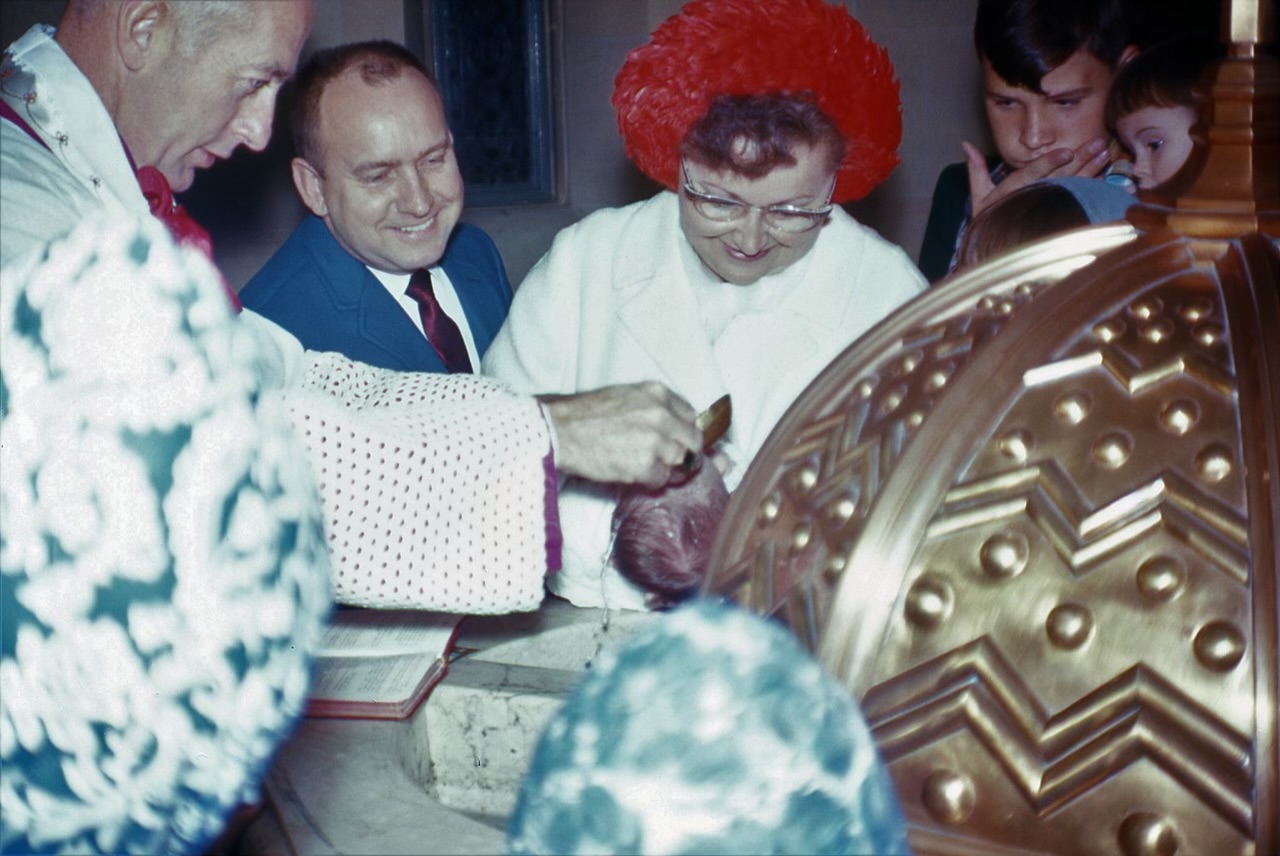
I was baptized by a bishop.  His name was Joseph M. Breitenbeck.  I never met the man, but I did see him on TV serving Mass with Pope John Paul II at the Pontiac Silverdome in 1987.  I think my mom thought I was her best shot at having a priest son.  However, I never felt that call.  The best I could do was become a church organist.

Except for a few years (high school into college) when I avoided religion, I've been a pretty faithful churchgoer most of my life.  I find the history of the Catholic church fascinating, especially the highly secretive process of selecting popes.  So, for the last couple weeks (ever since the funeral of Pope Franics), I've been reading up on the rules of a conclave and the names of the papabile (favored cardinals).

I'm sure the mothers of each of those cardinals had dreams of their sons becoming pope.  Perhaps, as Bishop Breitenbeck was drowning me with holy water, my mom had some thought about me becoming the first pope from the United States.  (The first of many disappointments she experienced because of me.)  

Maybe I was a pope in a former life.  Personally, I’d prefer to be the reincarnation of Robert Frost or Flannery O’Connor or Sylvia Plath (without the mental illness, I’ve already got daddy issues).  Of course, before Pope Francis was pope, he was just Jorge from Buenos Aires, and before Flannery O’Connor was THE Flannery O’Connor, she was just Mary from Savannah.  Fame is an artificial construct.  It can change people, sure, but, for the most part, I’d bet Pope Francis still felt like that little Argentinian boy even while blessing the crowds from the balcony of Saint Peter’s.  

I will never be a priest or bishop or cardinal or pope.  I will never be a Southern gothic writer from Georgia.  As Popeye says, “I yam what I yam.”  I’m a poet from the Upper Peninsula of Michigan.  I’m also a husband, father, teacher, friend, church musician, and library programmer.  In a year’s time, I might be something else.

Whether I like it or not, life is about change and reinvention.  I will not be the same person tomorrow that I am today.  Yes, a bishop baptized me—the same bishop who served Communion with Pope John Paul II over 40 years ago in Detroit.  That doesn’t mean the cardinals are going to elect me the first pope from North America.

Saint Marty wrote a poem tonight about reincarnation, based on the following prompt from The Daily Poet:

On this day in 1977, Seattle Slew won the Kentucky Derby.  Since racehorses have the most interesting names, look up the names of horses (they don’t have to be famous) and use ten to fifteen of them in a poem.  Or make a list of your own made-up humorous, poignant, or whimsical racehorse names.  Write a poem about something other than a horse race using either list of names.

When I Come Back

by: Martin Achatz

it will be as a flower
with a name like Charismatic
or American Pharoah or Tim Tam.
My petals will be striped purple,
my stem laced with thorns
to discourage being plucked for vases.

Or I will find myself buried
in a field of goldenrod, nestled
in the rib cage of a long-dead 
moose or sealed in a tomb 
of sun-baked manure—yes, I will
be a stone so precious it defies
words, begs to be placed on
the tongue and sucked until
it’s smooth as a frozen
tear or frog belly.  At night,
the moon will call me, sing
out my name:  Sunday Silence.

Or maybe I’ll sprout as a feather
in a peacock tail, ride all day
behind her until she shivers
herself into glory at dusk, a pleasant
colony of eyes blinking at the heavens.

A field of Ferdinand grass, swale
crowded with cattails, flash
flood in Thunder Gulch where
unbridled waters swallow
rock, mesa, saguaro in one
big brown gulp—I could be
all of these when I come back.

Or just maybe I’ll be a word or breath
in a poem that makes everyone 
say Damn! then Damn! again,
as if they’ve just found twenty dollars
in an old coat pocket or been kissed
hard by an old lover they haven’t seen
since high school or college.


Thursday, May 1, 2025

May 1, 2025: "Summer Solstice, New York City," Change, "Habemus Spring"

Yes, I know that it’s been a while since my last post.  A lot has happened since Good Friday.  Pope Francis died on Easter Monday.  President 47 ignored the Vatican dress code, played with his phone, chewed gum, and fell asleep in the front row of the papal funeral.  I taught my last classes for the winter semester.  

A lot has also stayed the same since my last post.  President 47 is still trying to dismantle the United States Constitution.  And defund NPR and PBS.  And get rid of the Department of Education.  And deport U.S. citizens to foreign countries without due process.  And send ICE agents into schools and churches.  I could go on, but you get the idea.  

It’s enough to make me want to climb to the top of a building and jump.

Speaking of which . . . 

Summer Solstice, New York City

by: Sharon Olds


By the end of the longest day of the year he could not stand it,
he went up the iron stairs through the roof of the building
and over the soft, tarry surface
to the edge, put one leg over the complex green tin cornice
and said if they came a step closer that was it.
Then the huge machinery of the earth began to work for his life,
the cops came in their suits blue-grey as the sky on a cloudy evening,
and one put on a bullet-proof vest, a
black shell around his own life,
life of his children's father, in case
the man was armed, and one, slung with a
rope like the sign of his bounden duty,
came up out of a hole in the top of the neighboring building
like the gold hole they say is in the top of the head,
and began to lurk toward the man who wanted to die.
The tallest cop approached him directly,
softly, slowly, talking to him, talking, talking,
while the man's leg hung over the lip of the next world
and the crowd gathered in the street, silent, and the
hairy net with its implacable grid was
unfolded, near the curb, and spread out, and
stretched as the sheet is prepared to receive at a birth.
Then they all came a little closer
where he squatted next to his death, his shirt
glowing its milky glow like something
growing in a dish at night in the dark in a lab and then
everything stopped
as his body jerked and he
stepped down from the parapet and went toward them
and they closed on him, I thought they were going to
beat him up, as a mother whose child has been
lost might scream at the child when its found, they
took him by the arms and held him up and
leaned him against the wall of the chimney and the
tall cop lit a cigarette
in his own mouth, and gave it to him, and
then they all lit cigarettes, and the
red, glowing ends burned like the
tiny campfires we lit at night
back at the beginning of the world.


It is the first day of May.  Summer is right around the corner.  In the next few months, lots of things in my life are going to be changing.  (Unfortunately, I don’t see impeaching President 47 as one of the changes.). My daughter is going to be moving downstate in early July to start medical school in the fall.  My son is going to be a senior in high school in the fall.  My sisters have decided to sell my mom and dad’s house (where I grew up) and move about 100 miles away.

I know that life isn’t static.  Whether I like it or not, loved ones grow up, move away, get sick, die.  Maybe that’s what is happening right now in Washington, D. C.  Growing pains.  Either we’re going to be a dictatorship, or we will rise up to protect and defend the Constitution.  Right now, I’m not quite sure which of those options will happen.

So, when faced with all these unknowns, I have to fall back on faith.  My daughter and son are great kids and love me.  The new pope will walk in the footsteps of Francis.  President 47 will eventually try to do something so stupid/outrageous that even Republicans will turn against him.  I have faith in all of these things.

Saint Marty wrote a poem for tonight about the changes of spring, based on the following prompt from The Daily Poet:

Look up the names of flowers that grow in your geographical location and write a poem using at least ten of those names in a poem.  Also, feel free to use the names of flowers in unusual ways, such as I slipped on my ladyslippers or she hollyhocked her way into our conversation.

Habemus Spring

by: Martin Achatz

Soon cardinal flowers will conclave
as harebells ring under rough blazing
stars.  This morning, I wait for trillium
to unfurl their snow wings, bless my house
as a pope is buried like a tulip bulb
in Rome.  This in-between winter
and summer time, so much has yet
to happen:  peepers chanting in swamp
milkweed, white snakeroot blossoming
above the roof of the Sistine Chapel.
Geese, with their clerical collars, open
their beaks, fill the heavens with trumpet
blasts as they carry the sun on their backs
into June  Tonight, the grass and butterfly
weed will stretch and pray for lilacs
to fill the world with their sweet incense.


Friday, April 18, 2025

April 18, 2025: “I Could Not Tell,” Good Friday, “The Passion of Charlie Parker”

It is Good Friday of the Easter Triduum. For Catholics, that means no meat. Fasting in between meals. When I was a kid, my parents wouldn’t even let us kids use electricity between noon and 3 p.m. (traditionally, the hours that Christ hung on the cross). We had to sit inside, do nothing but contemplate our sins and suffer. Self flagellation was not out of the question.

Nowadays, I’m usually perched on an organ bench at noon, waiting for the priest to start chanting.

Perhaps because of my Catholic upbringing, I find myself an emotional wreck most Good Fridays. Perhaps it has something to do with Jesus. Or all that fasting and sacrifice and guilt. Even if I’m not in one of my blue funks, I slip and keep slipping. By bedtime, I can’t even imagine the sun rising on Saturday.

Sharon Olds writes about guilt she has . . .

I Could Not Tell

by: Sharon Olds

I could not tell I had jumped off that bus,
that bus in motion, with my child in my arms,
because I did not know it. I believed my own story:
I had fallen, or the bus had started up
when I had one foot in the air.

I would not remember the tightening of my jaw,
the irk that I’d missed my stop, the step out
into the air, the clear child
gazing about her in the air as I plunged
to one knee on the street, scraped it, twisted it,
the bus skidding to a stop, the driver
jumping out, my daughter laughing
Do it again.

                         I have never done it
again.  I have been very careful.
I have kept an eye on that nice young mother
who lightly leapt
off the moving vehicle
onto the stopped street, her life
in her hands, her life’s life in her hands.


Do I have things that I’m sorry for?  Of course.  There isn’t a human being on this planet who doesn’t carry around a suitcase full of regrets.  If you say that you don’t have any regrets, you’re either lying or a malignant narcissist or Donald Trump.  For me, Good Friday really highlights my mistakes, and they’re a lot of them.  

The truth is that I think harboring regrets is a pretty useless pastime.  By constantly looking backward, you will never be able to move forward.  You’ll be stuck forever in the past.  As a Catholic, I can go to confession, give breath to my mistakes, and perform penance.  There’s something powerful about naming your transgressions out loud to somebody and hearing those words:  “You are forgiven.”  However, I rarely go to confession.  

Don’t worry.  I’m not going to start naming all of my regrets in this post.  I don’t have the time or energy to do that, and I’m sure you don’t either.  Instead, I just want to say that, if I’ve ever hurt you in any way, I’m sorry.  I hope that you can do the same for me.  (I sort of feel like Oprah Winfrey:  You’re forgiven!  And so are you!  And you!)

If you haven’t figured it out yet, life is pretty damn short, and it just keeps speeding up with each birthday.  There is never going to be a perfect time for atonement.  So do yourself a favor:  practice forgiveness.  Let go of all your regrets, if you can.  Embrace salvation, not crucifixion.

Saint Marty wrote a poem for tonight about regrets and lasts, based on the following prompt from The Daily Poet:

Today is the birthday of Bob Kaufman, founding father of the Beat Generation of poets.  In honor of Kaufman’s contribution to American letters, write a poem that relies on spontaneous invention, vibrant sonics, and the tones and structures of jazz.  To get in a bebop frame of mind read a selection of Kaufman’s poems at the Modern American Poetry website . . . If you do not have access to the Internet, write a poem that begins with the line I have folded my sorrows into the mantle of summer night, from Kaufman’s poem, “I have folded my sorrows.”

The Passion of Charlie Parker

by:  Martin Achatz

Bird, you outdid Jesus by a full year,
chased by hounds the whole time, belly
full of blood, fingers full of breath,
each day tasting like the last Marlboro 
in the pack or the last sticky sex 
in the backseat of a taxi with a girl
who says she loves the gin of your
skin, could take a bath in you, baptize
away all her disappointments—find
salvation in your hands passing over
the byways & highways of her body, 
hitchhiking all the way to that little
death, heart stop, gasp, moan, my God,
my God, why have you forsaken me,
forsaken, for-me-saken, for-my-my-
my-God!-saken me, me, me-God!-me?


Monday, April 14, 2025

April 14, 2025: “The Talk,” Being a Person, “Winter Rain”

Being a parent is a job that you parent yourself out of. One day, you’re driving your five-year-old daughter to her ballet lessons, and the next day, she’s apartment hunting with her boyfriend. You raise your child to be smart, independent, and confident, and then that child leaves because she’s smart, independent, and confident. And you’re left with a bunch of old dance costumes stored in the garage and a little bit of a broken heart.

Sharon Olds has a parent moment with her daughter . . .

The Talk

by: Sharon Olds

In the sunless wooden room at noon
the mother had a talk with her daughter.
The rudeness could not go on, the meanness
to her little brother, the selfishness.
The eight-year-old sat on the bed
in the corner of the room, her irises distilled as
the last drops of something, her firm
face melting, reddening,
silver flashes in her eyes like distant
bodies of water glimpsed through woods.
She took it and took it and broke, crying out
I hate being a person! diving
into the mother
as if
into
a deep pond—and she cannot swim,
the child cannot swim.


I’ve had my fair share of the kind of parent talks that Olds describes in this poem—when you have to teach your child hard lessons.  And it does all boil down to that simple statement—I hate being a person!  Being a human being can absolutely suck sometimes, and it’s up to the parent to help the child navigate that suckiness.

Here are some things that suck about being an adult:  work, taxes, aging, ear hair, bills, kale, death, heartbreak.  Eventually, every person living on this planet has to deal with the suck.  

It’s tax day in the United States.  That’s one of the suck.  I mailed my income tax check to the Treasury Department yesterday morning.  I wasn’t happy about doing it, because I’m not a huge fan of what the Republican-led government is going to do with my money.  As I was making out the check, I told my wife that I was going to include in the memo line what I want my money to be used for.  She just gave me a tired sigh and said, “Just write the damn check.”

My daughter has been a person for some time now.  She moved out of our home about three years ago.  She graduated from college, has a steady significant other, and a job.  Pretty soon, she’ll be heading off to medical school, moving even further away from my ability to parent her.

My son has been asserting his personhood for quite some time.  He’s stubborn and independent and wants to do everything his own way.  (I have no idea from whom he inherited these personality traits.)  He’s only 16 years old, and he’s already talking about getting an apartment with one of his friends when he graduates from high school.  

I wish I could tell both my kids to slow down.  Take time to enjoy being young and full of hope.  However, that’s another suck lesson to learn—how life sort of picks up speed with each passing year.  One day, you’re 21 and getting high with your friends.  The next day, you’re talking to your wife of almost three decades about retirement accounts and the strange-looking mole on your neck

If you can’t tell, I’m a little tired of being a person who pays taxes to a government that’s quickly devolving into a fascist dictatorship.  A person who has five jobs to pay the bills.  Who can’t eat a full order of cheese curds without spending at least a half hour on the toilet in the middle of the night.  Who worries about strange sounds his car or furnace is making.  I could go on, but I think you get the picture.

I really cherish the days when snowstorms and ice storms meant staying inside, reading, watching reruns of Gilligan’s Island or The Munsters or Lost in Space, and eating Hostess cupcakes.  Now, when it rains in the middle of a February night, I worry about power outages and road conditions (since the world doesn’t shut down for bad weather when you’re an adult person).  

I guess what I’m saying is I wish I could protect my kids from the harsh realities of being a person in the United States of America right now.  Lee Greenwood needs to change the words to his song.  He should be singing, “It’s hard to be an American” instead.  Or, more preferably, he needs to stop singing it altogether.

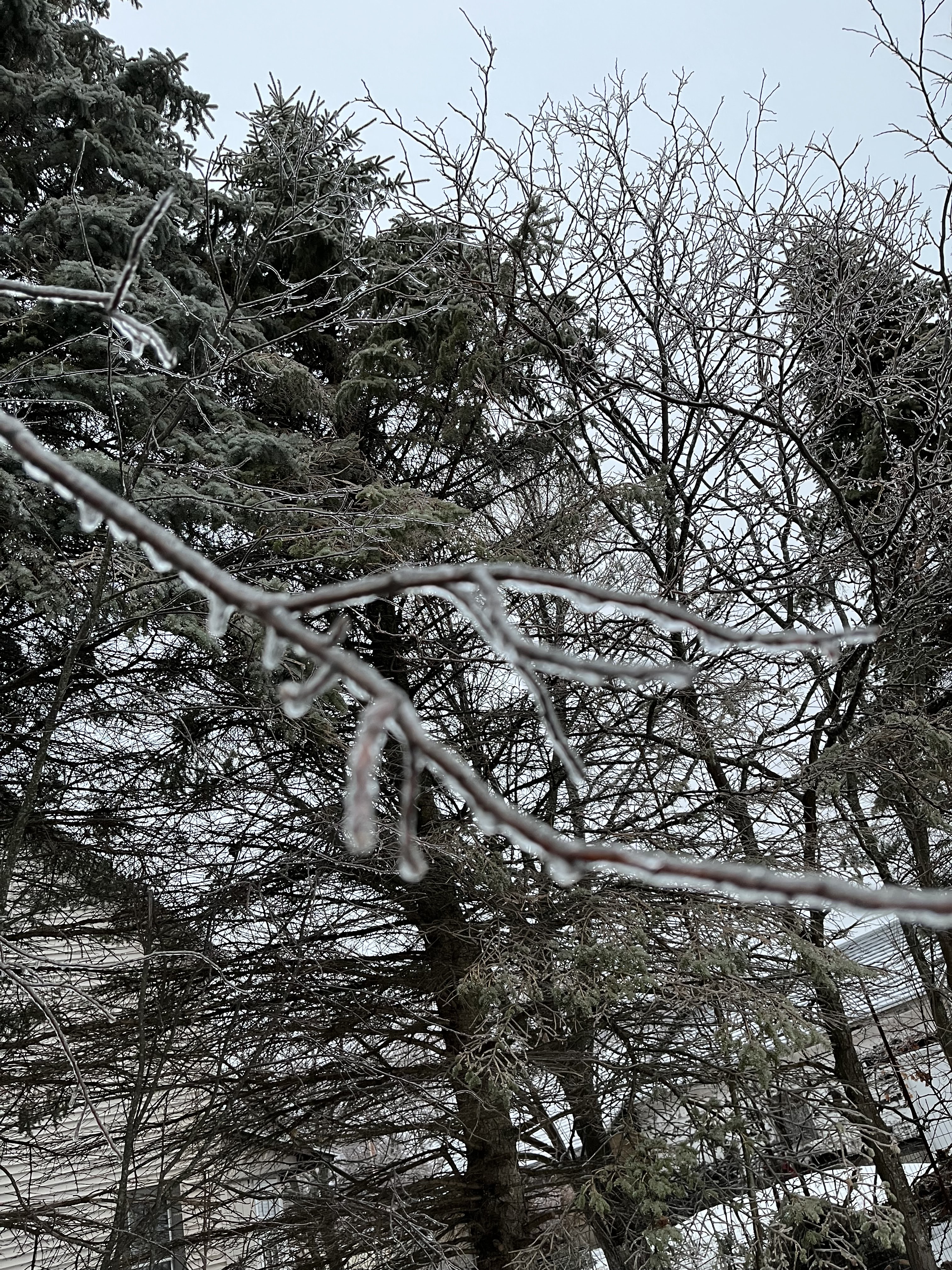
Saint Marty wrote a poem about an ice storm, based on the following prompt from The Daily Poet:

Write a poem that begins:  After the rain it all looked different.  Make sure your poem contains specific details about the landscape, the glistening, the spring flowers, and perhaps the mood of the speaker.

Winter Rain

by: Martin Achatz

After the rain it all looked different.
Last night, as I drifted toward
the Land of Nod, I heard thunder—
yes, thunder!—so loud it rattled 
panes, make my dog moan, scratch
in her sleep.  The water snapped, hissed
in the branches like some animal ready
to pounce on a smaller, wounded animal.
This morning, I found what was left
of a rabbit after a barred owl had its way
in the dark, fur, blood splattered like a Jackson
Pollock on the snowy ground.  Pine needles
sparked, frozen grenades of pine cones made
trees bow, genuflect like monks giving thanks
for another day, their timid souls raptured
into mud and blue and sunlight.