Showing posts with label M*A*S*H. Show all posts

Saturday, October 3, 2026

October 3, 2026: “The Cold Outside,” Absence, “The Impossibility of Honey”

Greetings, faithful disciples.

In my last post, I gave you a catalogue of trials and tribulations, from a broken sewer line to a strong bout of clinical depression.  I’ve always believed that the Book of Job in the Bible was allegorical.  I mean, who would believe so much shit could be heaped on the head of such a decent, honest human being?  And with God’s approval?  Today, I would file Job’s story under nonfiction versus religious studies or philosophy.  In short, because of my experiences these last few months, I understand Job’s struggles a LOT more.  

I’m not looking for sympathy.  Everyone deals with sadness and calamities in their lives.  That’s part of being a human being.  The world is a broken place, with broken people calling the shots.  My little laundry list of struggles is pretty inconsequential compared to Super El Niños and genocides and famines.  In fact, most people would look at my life and think, “What the hell do you have to be upset about?”  And those people would be correct.

That doesn’t negate the power of prolonged depression.  Rationally, I know I’m a really lucky person—roof over my head, food in the fridge, warm clothes, and jobs that pay all the bills (for the most part).  Overwhelming sadness, however, is not rational.  It comes from a place of worry, fear, and anxiety.  

Marie Howe writes about looming dread . . . 

The Cold Outside

by: Marie Howe

Soon I will die, he said—that was during the heat wave that summer:
the orange lilies bending toward the house beside the driveway,

the heater in his car broken on blasting.
And the green shade flapped against the window screen,

as if what was out there inhaled and exhaled,
sliding away from the window, banging lightly against the sill,

sucked flat against the screen,
then peeling off and blowing out again.

Today the cold outside is bright and brittle,
heaps of hard snow between the sidewalk and the street,

and look, someone has shoveled a narrow path in front of the bakery,
so that, walking, a person has to step aside

and let another person through,
or pass through as the other person steps aside.

Soon I will die, he said, and then
what everyone has been afraid of for so long will have finally happened,

and then everyone can rest.


This is not an easy poem.  It’s a hard poem, filled with hard reality.  I’ve seen enough of my loved ones fade away and die to know both the pain and relief of loss.  My brother died suddenly, only after suffering for years with the effects of a stroke.  My sister, Sally, struggled for over two years, and my sister, Rose, was in and out of the hospital several times in the last year of her life.  Both of my parents ended up in nursing homes near the end of their lives.

Emily Dickinson wrote that Death “kindly stops” to pick up passengers, because, in the face of immense, daily anguish, mortality IS kind.  Terrifying (if you don’t believe in an afterlife), but kind.  I think Death did kindly stop for my mom, dad, sisters, and brother.  And don’t forget that the other passenger in Dickinson’s fatal carriage ride, besides Dickinson herself, is Immortality.  That’s the reason I find Dickinson’s vision of the Grim Reaper almost hopeful.  It’s not an end.  It’s a journey.

Of course, that knowledge doesn’t make the absence of someone you love any easier.  Loss is loss, and it comes with a whole trainload of grief.  As a way to combat my recent depression, I’ve been streaming episodes of the sitcom M*A*S*H.  It’s a TV show I have clear memories of watching with my entire family, every week.  Sure, my father was sort of MAGA-ish before MAGA was even a thing.  And yes, I didn’t always understand the episodes dealing with the insanities of war when I was younger.  But Hawkeye and BJ and Klinger and Colonel Potter and Hot Lips and the rest of the 4077th showed up every week, without fail.  

I often get stuck on movies and TV shows, watching them over and over and over to the dismay of my wife and son.  I reread books from my youth, as well.  I can’t tell you how many times I’ve visited Holden Caulfield or Wilbur and Charlotte or Willy Wonka.  It’s comforting to know how the story ends, even if that ending is incredibly sad.  (Charlotte’s death destroys me every time.)  No surprises.

That’s very comforting for a person dealing with overwhelming fear and anxiety and sadness.  It’s like a security blanket.  Sure Holden has a breakdown at the end of The Catcher in the Rye, but he’s getting help and will eventually be reunited with his beloved little sister Phoebe.  Yes, the Korean War ends and Hawkeye returns to Crabapple Cove, but he survived.  If I know the fates of all these characters I love, I don’t have to worry about the future (which, for me, is a constant source of Sturm und Drang).  

Last Sunday, my puppy was attacked again by a German shepherd.  The attack resulted in some serious wounds that required surgery.  There is a row of staples running down my puppy’s back; it looks like she’s been zippered into her body.  She’s going to be alright, thank God.  However, this past week has been really difficult for me, mood wise.  Let’s just say that even Hawkeye couldn’t save my emotional life.

I’m going to be okay.  I tell myself that every morning.  Remind myself of it frequently during the day.  Repeat it as I’m drifting off to sleep.  It’s my mantra at the moment.  I’ll keep chanting it in my head until my puppy is healed, my plumbing problems are fixed, and you-know-who is no longer occupying the Oval Office.  At the moment, those things seem impossible.

But Saint Marty knows, as the song goes, the sun will come out tomorrow.  In the meantime, here’s a poem Saint Marty wrote about impossible things that are true . . . 

The Impossibility of Honey

by: Martin Achatz

Saturn is gas, would float in a bathtub

lead snows on Venus’s mountaintops

Jupiter’s red pupil is a 300-year-old storm

winter lasts 42 pitch-black years on Uranus

the Sun dances in Mercury’s skies—rising, stopping, reversing

one volcano on Mars could swallow Arizona

Neptune was discovered through math:  x + y = planet

ice mountains float across Pluto’s surface

and bees fly 750 miles on Earth to create 
          a single teaspoon of sweetness


Thursday, October 11, 2018

October 11: The Musket, Moral Dilemma, Rumors

During the most violent shocks of the Typhoon, the man at the Pequod's jaw-bone tiller had several times been reelingly hurled to the deck by its spasmodic motions even though preventer tackles had been attached to it- for they were slack- because some play to the tiller was indispensable.

In a severe gale like this, while the ship is but a tossed shuttlecock to the blast, it is by no means uncommon to see the needles in the compasses, at intervals, go round and round. It was thus with the Pequod's; at almost every shock the helmsman had not failed to notice the whirling velocity with which they revolved upon the cards; it is a sight that hardly anyone can behold without some sort of unwonted emotion.

Some hours after midnight, the Typhoon abated so much, that through the strenuous exertions of Starbuck and Stubb- one engaged forward and the other aft- the shivered remnants of the jib and fore and main-top-sails were cut adrift from the spars, and went eddying away to leeward, like the feathers of an albatross, which sometimes are cast to the winds when that storm-tossed bird is on the wing.

The three corresponding new sails were now bent and reefed, and a storm-trysail was set further aft; so that the ship soon went through the water with some precision again; and the course- for the present, East-south-east- which he was to steer, if practicable, was once more given to the helmsman. For during the violence of the gale, he had only steered according to its vicissitudes. But as he was now bringing the ship as near her course as possible, watching the compass meanwhile, lo! a good sign! the wind seemed coming round astern; aye, the foul breeze became fair!

Instantly the yards were squared, to the lively song of "Ho! the fair wind! oh-ye-ho cheerly, men!" the crew singing for joy, that so promising an event should so soon have falsified the evil portends preceding it.

In compliance with the standing order of his commander- to report immediately, and at any one of the twenty-four hours, any decided change in the affairs of the deck,- Starbuck had no sooner trimmed the yards to the breeze- however reluctantly and gloomily,- that he mechanically went below to apprise Captain Ahab of the circumstance.

Ere knocking at his state-room, he involuntarily paused before it a moment. The cabin lamp- taking long swings this way and that- was burning fitfully, and casting fitful shadows upon the old man's bolted door,- a thin one, with fixed blinds inserted, in place of upper panels. The isolated subterraneousness of the cabin made a certain humming silence to reign there, though it was hooped round by all the roar of the elements. The loaded muskets in the rack were shiningly revealed, as they stood upright against the forward bulkhead. Starbuck was an honest, upright man; but out of Starbuck's heart, at that instant when he saw the muskets, there strangely evolved an evil thought; but so blent with its neutral or good accompaniments that for the instant he hardly knew it for itself.

"He would have shot me once," he murmured, "yes, there's the very musket that he pointed at me;- that one with the studded lock; let me touch it- lift it. Strange, that I, who have handled so many deadly lances, strange, that I should shake so now. Loaded? I must see. Aye, aye; and powder in the pan;- that's not good. Best spill it?- wait. I'll cure myself of this. I'll hold the musket boldly while I think.- I come to report a fair wind to him. But how fair? Fair for death and doom,- that's fair for Moby Dick. It's a fair wind that's only fair for that accursed fish.- The very tube he pointed at me!- the very one; this one- I hold it here; he would have killed me with the very thing I handle now.- Aye and he would fain kill all his crew. Does he not say he will not strike his spars to any gale? Has he not dashed his heavenly quadrant? and in these same perilous seas, gropes he not his way by mere dead reckoning of the error-abounding log? and in this very Typhoon, did he not swear that he would have no lightning-rods? But shall this crazed old man be tamely suffered to drag a whole ship's company down to doom with him?- Yes, it would make him the wilful murderer of thirty men and more, if this ship come to any deadly harm; and come to deadly harm, my soul swears this ship will, if Ahab have his way. If, then, he were this instant- put aside, that crime would not be his. Ha! is he muttering in his sleep? Yes, just there,- in there, he's sleeping. Sleeping? aye, but still alive, and soon awake again. I can't withstand thee, then, old man. Not reasoning; not remonstrance; not entreaty wilt thou hearken to; all this thou scornest. Flat obedience to thy own flat commands, this is all thou breathest. Aye, and say'st the men have vow'd thy vow; say'st all of us are Ahabs. Great God forbid!- But is there no other way? no lawful way?- Make him a prisoner to be taken home? What! hope to wrest this old man's living power from his own living hands? Only a fool would try it. Say he were pinioned even; knotted all over with ropes and hawsers; chained down to ring-bolts on this cabin floor; he would be more hideous than a caged tiger, then. I could not endure the sight; could not possibly fly his howlings; all comfort, sleep itself, inestimable reason would leave me on the long intolerable voyage. What, then, remains? The land is hundreds of leagues away, and locked Japan the nearest. I stand alone here upon an open sea, with two oceans and a whole continent between me and law.- Aye, aye, 'tis so.- Is heaven a murderer when its lightning strikes a would-be murderer in his bed, tindering sheets and skin together?- And would I be a murderer, then, if"- and slowly, stealthily, and half sideways looking, he placed the loaded musket's end against the door.

"On this level, Ahab's hammock swings within; his head this way. A touch, and Starbuck may survive to hug his wife and child again.- Oh Mary! Mary!- boy! boy! boy!- But if I wake thee not to death, old man, who can tell to what unsounded deeps Starbuck's body this day week may sink, with all the crew! Great God, where art Thou? Shall I? shall I?- The wind has gone down and shifted, sir; the fore and main topsails are reefed and set! she heads her course."

"Stern all! Oh Moby Dick, I clutch thy heart at last!"

Such were the sounds that now came hurtling from out the old man's tormented sleep, as if Starbuck's voice had caused the long dumb dream to speak.

The yet levelled musket shook like a drunkard's arm against the panel; Starbuck seemed wrestling with an angel, but turning from the door, he placed the death-tube in its rack, and left the place.
"He's too sound asleep, Mr. Stubb; go thou down, and wake him, and tell him. I must see to the deck here. Thou know'st what to say."

An incredible little chapter in which Starbuck, one of the few members of the Pequod crew who seems to understand the danger of Ahab's obsession, contemplates committing murder.  The musket is in Starbuck's hands.  The longest paragraph in this passage is an inner argument--Starbuck trying to justify taking another man's life.  It's torturous.  He knows that if he follows Ahab's orders, he may never see his wife and child again.  Yet, in the end, Starbuck sets these thoughts aside, puts the musket back on its rack, and returns to the ship's deck.

I would guess we all face moral dilemmas pretty much every day of our lives.  Probably not as extreme as Starbuck's dilemma in this chapter, but certainly situations that test our characters.  It could be something as simple as whether to stretch that 15 minute coffee break at work to 20 minutes.  Or it could be something more serious--a handful of pills to end a long battle with depression.  Big, life-changing/ending decisions.

Don't worry.  I'm not entertaining suicidal ideation.  It's simply what's on my mind after reading this chapter from Moby-Dick.  I've worked hard all week.  And all week long, I've dealt with rumors regarding the closure of the outpatient surgery center where I'm employed.  Now, generally, I don't put much stock in unverifiable half-truths and innuendo.  I can't say the same for my coworkers, who've become a pack of Chicken Littles.  The sky is falling for them.

That doesn't mean that I'm sticking my head in the sand.  The huge healthcare organization that owns the surgery center is all about money.  If closing the surgery would mean bigger profits for the organization, then the surgery center will close.  Plus, the healthcare organization was recently purchased by a huge, international investment banking firm.  Its bottom line is not good healthcare.  Its bottom line is the bottom line.  Dollar signs.

So, here is the moral/ethical dilemma I face--1) waiting to see if the surgery center remains open,  OR 2) being proactive and searching for another job right now.

I will be honest.  I have lost a lot of sleep this week.  I'm not really sure what I should do.  I've dealt with a lot of change and upheaval these last few years of my life.  I want to believe in stability, but I also don't want to be stupid.  I'm the main source of income for my family.  My job provides our health insurance.  We can't afford to lose these things.

I don't have an easy way to end this post tonight.  No answers.  I'm tired and hungry.  There are six bananas on my kitchen table right now.  I want to eat those bananas, one after another, until they're all gone.  Then I want to take a long nap.  Maybe wake up for my wife's birthday at the end of the month.  Or Thanksgiving.  Maybe Christmas.

This evening, Saint Marty is thankful for reruns of old television shows, like M*A*S*H, because Hawkeye will always live in the Swamp, Radar will always sleep with his teddy bear, and Klinger will always look good in a dress.  Things don't change in reruns.


Wednesday, June 29, 2011

June 29: Saint Peter, Fishing, Dinner

One of today's feast saints is Peter, disciple and one of the most flawed men in the whole Jesus narrative.  I mean, he argues with Jesus, denies Jesus (three times!), and hides in fear after Jesus' crucifixion.  Peter's faith was far from perfect, that's for sure.  He's a man after my own heart.  I mean, if Peter can be that screwed up and still become the first leader of the Christian church, there's still hope for me.

I was pretty hard on myself last night.  If you couldn't tell from yesterday's post, I wasn't in the greatest of moods.  It didn't change when I got home.  I just couldn't shake a sense of...I guess the best word I can come up with is "failure."  I felt like a failure last night.  Some members of my Spiritual Autobiography Workshop didn't show up, so I postponed the session.  Then I started going through a collection of my newest poems, nearly 100 pages of verse.  I didn't like what I read.  I found a couple of typos.  Each poem struck me as trivial, stupid, repetitive.  I finally had to put the binder away.


My daughter helps me

My daughter called me from the trailer park last night.  She was homesick.  At 9:30 p.m., I drove out and picked her up.  When she saw me at the door of the trailer, she wrapped her arms and legs around me, and I carried her to my car.  When she got home, she took a shower, and then we watched an episode of M*A*S*H while she ate a bowl of ravioli.  After she was done eating, she sat next to me, holding my hand.  My daughter made me feel loved, cherished, important at the end of a day where I felt small, sad, and a little useless.

Part of the work in the Spiritual Autobiography Workshop is to develop your ability of "noticing."  At our first meeting, I talked with the group members about paying attention, recognizing the evidence of God in your life.  It's a practice that not very many people exercise, including myself.  However, last night, I exercised it.

I was defeated and depressed.  I couldn't even muster enough self-confidence to appreciate my own poetry.  I was just sitting on the coach, wallowing.  Then my daughter called.  Within an hour of being with her. of taking care of her needs, I was feeling God in my life.  My daughter changed my attitude, made me sense God's love.  By loving her, I knew I was loved.

I know that sounds corny, but I've held on to that feeling today.  Of course, by about mid-morning, I started getting phone calls from home.  My daughter and son were screaming at each other.  My daughter somehow managed to completely soak her only pair of shoes.  My daughter had an argument with her best friends.  My daughter wasn't invited to go fishing with her cousins.  Typical ten-year-old kid stuff.  Yet, even those phone calls let me know that I was important, loved.

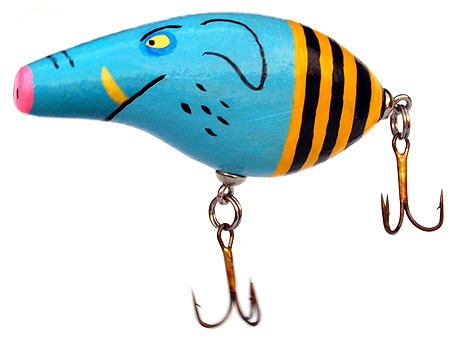
Tonight, I am meeting my family for dinner.  My wife will be there with my son and daughter.  I will hear the horror stories of the day.  I will hear how my daughter missed using her new tackle box and fishing lures.  (Peter is also the patron saint of fishermen.)  Listening to all the chaos and drama, I will be happy.

Because Saint Marty will be noticing.